

Cassera Gallery
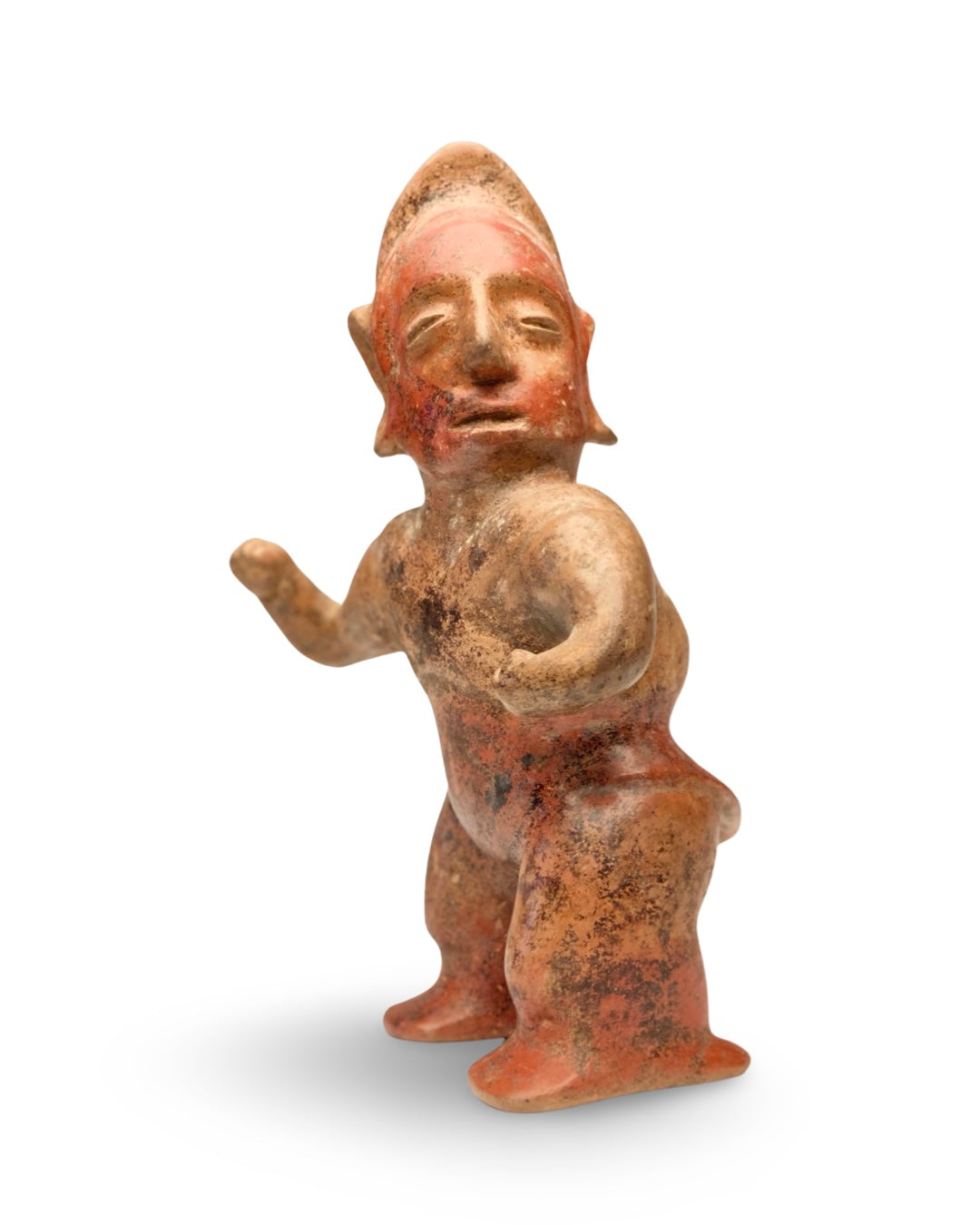
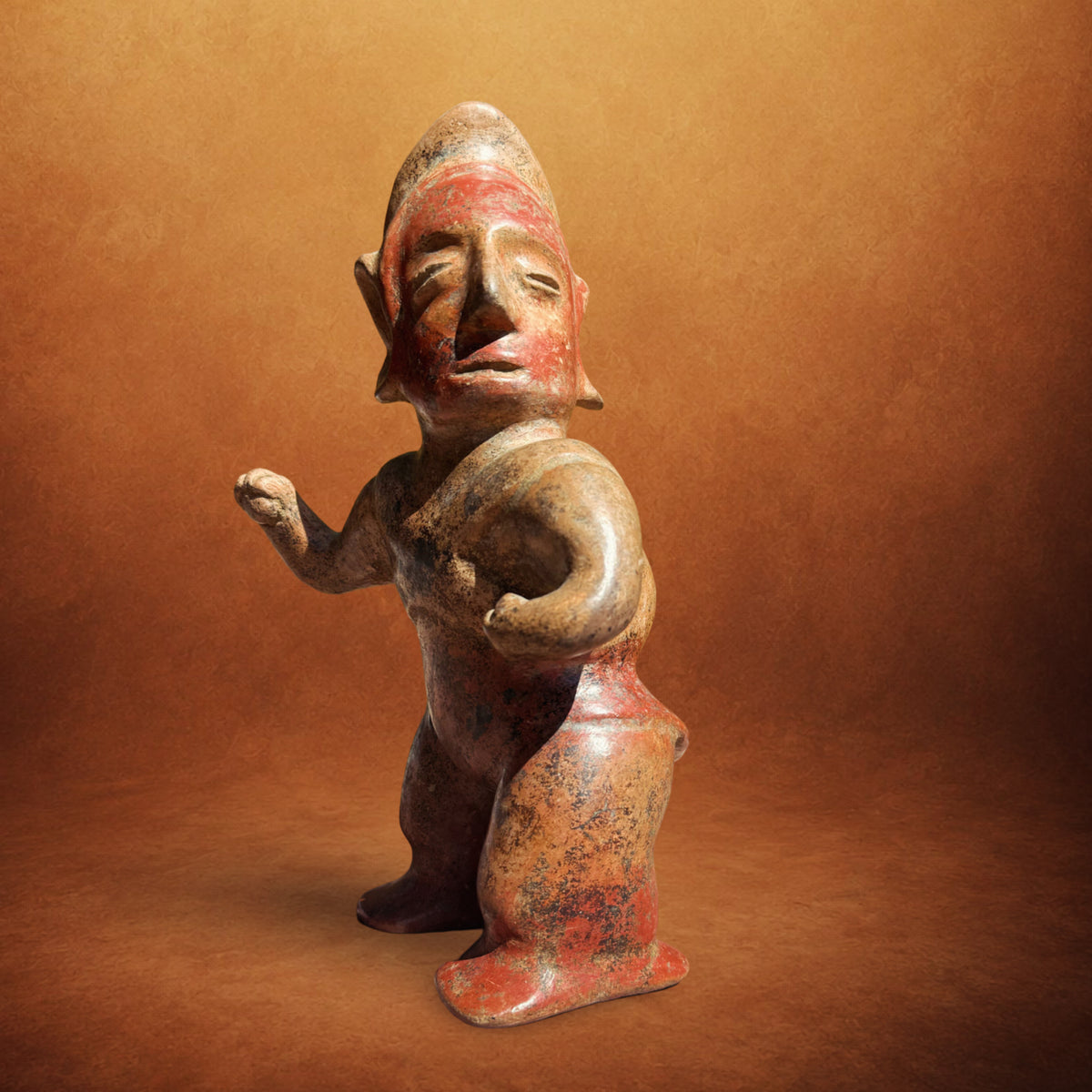
Colima Ball Player
Colima Ball Player
Couldn't load pickup availability
Ancient Colima Ball Player
Origin: Western Mexico
Circa: 300 BC - 300 AD
Height: 11.25 in
Wonderful movement, very expressive. Mineral deposits and root markings.
From the Estate Collection of Dr. Armin Sadoff, Beverly Hills,
This Colima ballplayer is an ancient ceramic sculpture depicting a participant of the Mesoamerican ballgame. These artifacts were created by the pre-Columbian West Mexico shaft tomb culture (approx. 300 BCE to 500 CE) in what is now the state of Colima, Mexico.
Figures are crafted from redware terracotta pottery, and often covered in a polished slip. They exhibit a highly dynamic, smooth, and rounded aesthetic typical of the Comala artistic style. Unlike stiffer figures from neighboring regions like Jalisco or Nayarit, Colima figures are frequently shown standing or crouching in active stances, grasping a ball, or wrestling with an opponent. While many were created as solid or hollow tomb offerings to signify the deceased’s status, some were constructed as functional ceramic whistles or musical instruments used during rituals.
The Mesoamerican ballgame (ullamalitzli) was not merely an athletic event, but a deeply spiritual and political ritual. It symbolized the cosmic battle between life and death, sun and underworld, or warfare proxies between rival factions. Placing these ballplayer figures inside deep shaft tombs served to protect the deceased or showcase their elite status in the afterlife.Many of these ancient artifacts can today be observed in premier world collections, including LACMA, the Princeton University Art Museum, The Metropolitan Museum of Art, and the Smithsonian.
Share